As a Teacher, How Did I Not Know About Schwa?

By Melanie Brethour, Founder of Decoding Dyslexia Quebec, CERI Structured Literacy Teacher and associate of the Orton Gillingham Academy.
Understanding the most common vowel sound in English
I remember the moment I first learned about the schwa. As a teacher, it stopped me in my tracks. How had I never learned about something that shows up in so many of the words we read and write every day? And once I understood it, I started to see it everywhere and in my students.
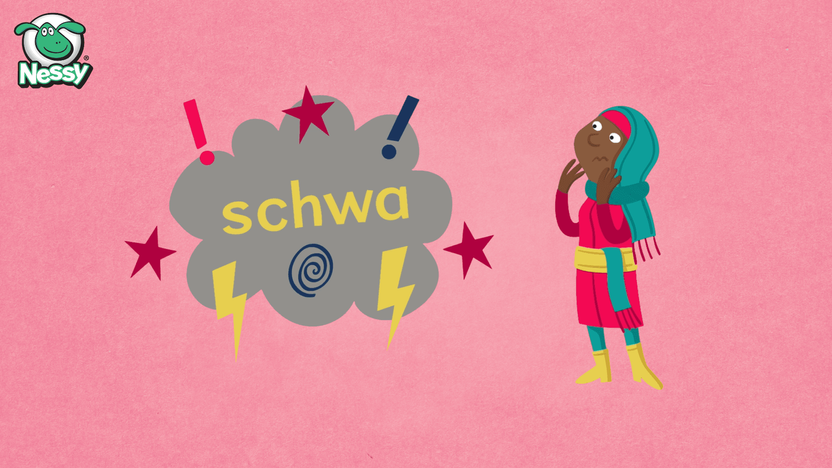
The schwa is a vowel sound. It happens when a vowel is in an unstressed syllable and does not say its usual sound. Instead, it makes a soft, reduced sound like /u/. It is written as /ə/. Any vowel can make the schwa sound, and it only appears in unstressed syllables. It is also the most common vowel sound in English.
The schwa is quick and quiet. It is not strong or clear like the vowel sounds we usually teach. It sounds like a relaxed /u/ in the weaker part of a word, where the voice naturally softens.
You can hear the schwa in many common words. In about, the first syllable is pronounced /u/ before the stressed second syllable. In banana, both the first and last syllables are reduced. In sofa, the final vowel softens. Words like ago and alone also begin with this reduced vowel sound. These are all clear examples students can hear once their attention is drawn to it.
This matters because schwa shows up in many of the words our students read and spell every day. Students are taught to apply phonics, say each sound, and match sounds to letters. But with schwa, the vowel does not follow those expectations. That is often where confusion begins.
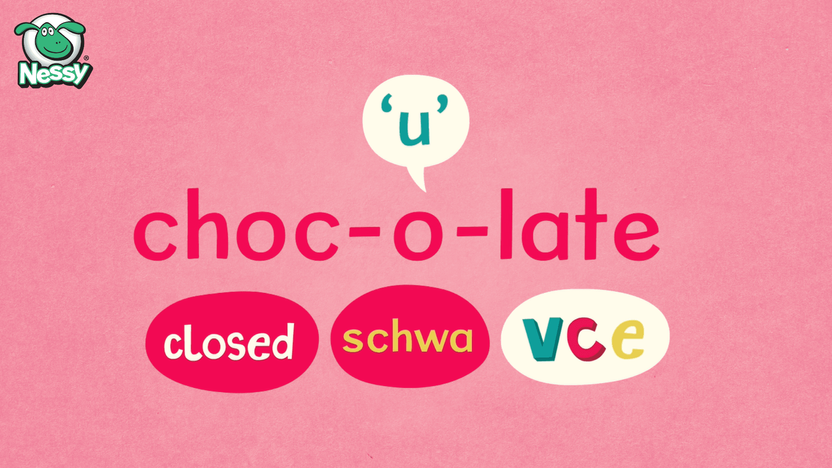
In the classroom, this can sound like students pronouncing every syllable with equal stress or saying vowels too clearly in parts of the word that should be softer. They are not guessing. They are applying what we taught them. They just do not yet understand that vowels can reduce in unstressed syllables.
As teachers, the goal is not to overwhelm students but to build awareness over time. We can talk about it in simple terms and help students listen for the strong and weak parts of words. Starting with reading rather than spelling allows students to become familiar with how words sound before asking them to represent those sounds in writing. Returning to the concept regularly, especially when working with longer words, helps reinforce understanding.
There are also helpful resources available, including those created by Yvette Manns, who started National Schwa Day to bring awareness to this important concept. These kinds of resources can support teachers in making the schwa more visible and easier for students to understand.
There is even a day dedicated to this often overlooked sound. National Schwa Day is celebrated on April 7. Teachers can explore lessons, activities, and classroom ideas through National Schwa Day.
One simple idea that sticks is this: the schwa is never stressed. That understanding helps students know where to look for it and how it works within a word.
The schwa is not an exception. It is part of how English works. But it is something many of us were never taught. And once you understand it, you start to see why spelling can feel confusing and why longer words can be tricky. Understanding the schwa changes the way we understand reading and how we support our students.